Why Edmonton Eavestroughs Fail: The “Big Three” Local Threats?
In the Edmonton roofing industry, there is a massive difference between “gutters” and eavestroughs. While the rest of the world uses the former, YEG homeowners know that an eavestrough in Alberta has a harder life than almost anywhere else in Canada.
Between the -40°C deep freezes and June’s notorious “Poplar Snow,” your eavestrough drainage system is the only thing preventing five-figure foundation repairs. This guide is the definitive resource for maintaining a functional eavestrough system in the Capital Region.
Why Edmonton Eavestroughs Fail: The Local “Big Three”
While eavestrough maintenance is a universal homeownership chore, Edmonton’s unique geographic location creates a “perfect storm” for drainage failure. Our city sits in a transition zone where heavy boreal forest debris meets a volatile prairie climate. This means your eavestroughs aren’t just dealing with rain; they are being bombarded by hyper-seasonal organic matter and extreme thermal expansion that can warp metal in a single afternoon. Understanding these three local threats is the difference between a simple seasonal eavestrough cleaning and a catastrophic foundation failure.
The June “Poplar Fluff” Clog
If you live in a mature neighborhood like Glenora or Highlands, you know that June brings more than just sun—it brings a blanket of white poplar fluff. This debris acts like a filter, trapping roof granules and silt until it creates a thick, waterproof “mat.” This is why many Edmontonians find their gutters overflowing in July even after a spring cleaning.
The “Pseudo-Chinook” Effect in YEG
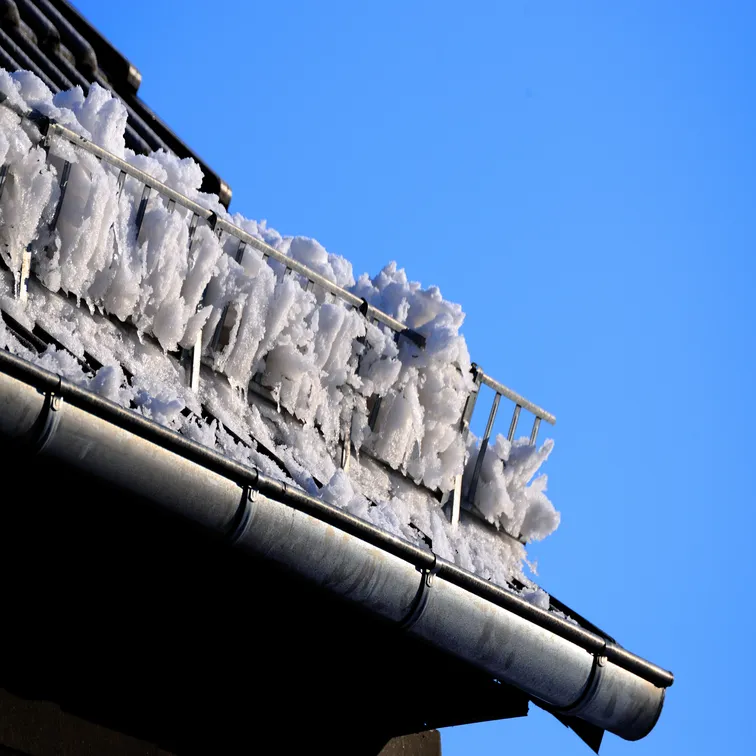
Edmonton may not get the 20°C jumps that Calgary gets, but we get frequent “Arctic Front Flips” where we go from -25°C to +4°C in 48 hours.
The Result: The water flash-freezes into a “slug” of ice. If there is debris in the trough, it creates a dam.
The Damage: This causes the top layer of roof snow to melt. That water runs down into an eavestrough that is still at -20°C (thermal mass).
High-Clay Soil & Foundation Risk
In areas like Windermere or Tamarack, our soil has extremely high clay content. When an eavestrough overflows, the soil saturates and puts immense pressure on your basement walls. Eavestrough clearance isn’t just about the roof; it’s about keeping your basement dry.
The Professional Eavestrough Cleaning “Clearance” Checklist
Based on our search data, homeowners often ask about “Gutter Clearance or Eavestrough Clearance” Here is the professional standard for a 100% clear system:
Miter Inspection: Check every corner for leaks. In Edmonton’s climate, standard caulking often snaps.
Roof Debris Removal: Cleaning the eavestroughs isn’t enough. You must clear the moss and silt from the lower shingles. If you don’t, the next rain will wash that debris right back into FAthe clean eavestrough.
Manual Scoop: Remove large organic matter by hand. Never use a leaf blower on wet Edmonton “gutter sludge”—it only packs the debris tighter into the downspout elbows.
The Downspout Flush: A system is only as good as its exit point. We recommend a high-pressure flush to ensure the underground drains or extensions are moving water at least 6 feet away from the foundation.
Technical Repairs: Surviving a -40°C Winter
- Sealing Corner Leaks: We recommend Rust-Oleum LeakSeal. Its rubberized formula flexes when the aluminum expands in the summer heat and contracts in the winter.
- Emergency Wet Fixes: If you find a leak during a rainy Edmonton spring day, Henry 208R Wet Patch is the only sealant that will bond to wet or frozen metal.
- End-Cap Durability: To prevent the common “end-cap snap” in January, use Henry Tropi-Cool Silicone. It remains flexible down to -40°C.
Safety & The “Ladder Rule”
Working at heights in Alberta is dangerous due to unpredictable wind gusts.
Spotter: Always have a second person on the ground, especially in neighborhoods with uneven grading like Riverbend.
The 4-to-1 Rule: For every 4 feet of height, the base of the ladder should be 1 foot away from the wall.
Ladder Stand-offs: Never lean a ladder directly against the eavestrough; it can crush the aluminum and ruin the “slope” of the system.
When is it Time to Stop Cleaning?
Cleaning is a recurring expense and a physical risk. If you find yourself cleaning your eavestroughs more than twice a year—or if the ladder is becoming a safety concern—it may be time to consider a permanent solution.
Modern micro-mesh systems like LeafShield™ are designed to handle Edmonton’s specific debris, from poplar fluff to pine needles, allowing you to opt-out of the cleaning cycle forever.
Frequently Asked Questions (FAQ)
1. How often should I clean my eavestroughs in Edmonton?
For most Edmonton neighborhoods, we recommend a minimum of two cleanings per year: once in late June (after the Poplar fluff finishes falling) and once in late October (after the final leaves drop but before the first permanent freeze). If you live in a heavily treed area like Glenora or Gold Bar, a third cleaning in August may be necessary to prevent mid-summer overflow.
2. Does roof cleaning help my eavestroughs stay clear?
Absolutely. In fact, cleaning your troughs without addressing roof debris is only a temporary fix. Silt, moss, and loose shingle granules on your roof will wash directly into your clean eavestroughs during the first heavy rain. A professional “clearance” service should always include brushing off the lower edge of the roof to prevent immediate re-clogging.
3. What happens if I don’t clean my eavestroughs before winter?
In Alberta, this is a recipe for Ice Damming. Standing water in a clogged trough will freeze solid, creating a heavy ice block that can warp your gutters, pull the fascia board away from your home, and force melting snow upward under your shingles, leading to attic leaks.
4. How much does professional eavestrough cleaning cost in Edmonton?
While prices vary based on the height and complexity of the roof, the average Edmonton homeowner can expect to pay between $175 and $350 for a standard detached home. Specialized services involving 3-story heights or heavy roof debris may be higher.
Need a Hand with the Ladder?
Staying off the roof is the safest choice for any homeowner. If your eavestroughs are overflowing, or if you simply want a professional “System Health Check” before the next big Edmonton storm, we’re here to help. At LeafShield, we provide thorough, safety-first eavestrough cleaning and clearance across the entire Capital Region.
Click Below to request a free cleaning estimate
or call us today at (587) 594-6734